
Kruger National Park: The Ultimate Self-Drive Safari Guide
There are game reserves across Africa that promise the wild, and then there is Kruger. South Africa’s flagship national park occupies a singular position in the safari world — not because it is the most remote or the most exclusive, but because it has perfected the art of making the wilderness genuinely accessible. For anyone planning a self-drive safari in Africa, whether it is your first or your tenth, Kruger National Park is the benchmark against which every other experience is measured. It is also one of the finest destinations in southern Africa for budget-friendly self drive camping safaris, one-way self drive safari routes, and multi-day self-guided game drives that move at your own pace.
A Park Born from a President’s Vision
The story of Kruger begins in 1898, when Paul Kruger, President of the South African Republic, designated a stretch of Lowveld bushland between the Sabie and Crocodile Rivers as the Sabie Game Reserve — a deliberate act to protect wildlife from rampant over-hunting. The reserve was elevated to national park status in 1926, formally merging with the adjacent Shingwedzi Game Reserve under the National Parks Act, and bearing Kruger’s name ever since.
Self-Drive Camping in Kruger: Rest Camps and Bush Stays
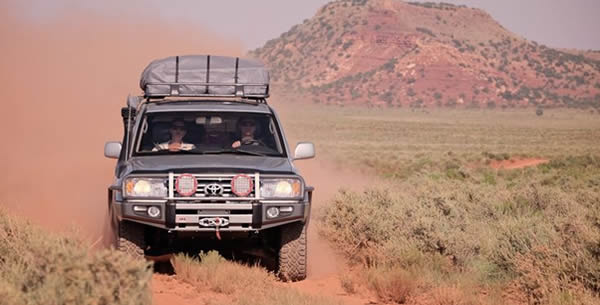
No other African park has developed a camp system quite like Kruger’s, and for travellers searching for affordable self-drive camping safaris in southern Africa, this network is genuinely transformative. There are twelve main rest camps spread across the park’s length, supplemented by smaller bushveld camps, satellite camps, and private concession lodges. For the independent self-drive visitor, the rest camps are the heartbeat of the experience.
Skukuza, on the southern bank of the Sabie River, is the park’s administrative headquarters and its largest camp. It has restaurants, a petrol station, a grocery shop, an ATM, a car rental desk, and even its own small airport — making it an excellent base camp for first-time self-drive safari visitors flying into the Lowveld. It can feel almost town-like compared to the bush outside its gates, but the wildlife along the river frontage is spectacular. Hippos grunt through the night while fish eagles call at dawn.
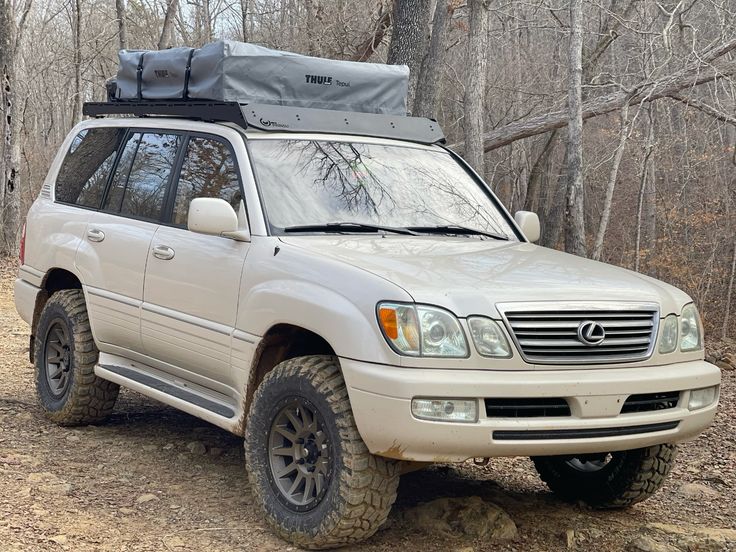
Budget Car hire and Camping Trips in Africa’s wilderness.
Explore South Africa on self drive safari with camping. Book a 4×4 Land Cruiser on budget at $110/day with camping equippment.

Hilux pick for camping and self drive trips in Africa.
Is one of the most preffered 4×4 for road trips in the southern parts of Africa. Rent from Cape town to Windhoek in Namibia

4×4 Overlanding Safaris from the Southern Africa
For cross-country self-drive safaris, the Toyota Land Cruiser X is one of the best choices. Choose stability and consistency
The Lower Sabie, just to the east, sits on a wide bend of the Sabie River and is consistently rated among the most beautiful self-drive camping spots in Kruger. Game viewing from the camp’s open-air restaurant is a genuine experience in itself — elephants crossing the river, buffalo grazing the far bank, and raptors circling overhead. Satara, deep in the central plains, is the choice for predator enthusiasts; lions are seen with remarkable frequency on the roads surrounding this camp.

Further north, Letaba sits above its namesake river and houses the Elephant Hall, a moving museum dedicated to Kruger’s famous “Magnificent Seven” tuskers. Olifants, set on a dramatic bluff overlooking the Olifants River gorge, offers one of the most spectacular viewpoints in any national park on the continent — and is a natural overnight stop on a north-south one-way self-drive safari route through Kruger.
Every main rest camp is equipped with accommodation ranging from campsites and basic safari tents to self-catering bungalows and guesthouses. Most have at least a small shop stocking basics, a communal kitchen, and a fuel station — the last of these being critically important for any self-drive traveller planning multi-day game drive routes across this vast park. Running out of fuel in the Kruger bush, with the nearest pump 100 kilometres away, is an easily avoidable misadventure.
What Makes Kruger Unmistakable for Self-Drive Safari Travellers
Ask any experienced safari-goer what separates Kruger from the rest, and the answer usually comes down to one word: infrastructure. For anyone researching how to plan a self-drive safari in Africa without a guide, Kruger is the obvious starting point. It has over 2,500 kilometres of paved and gravel roads threading through its interior, making it one of the most navigable game reserves for independent travellers on the planet. Speed limits are strictly enforced — 50 km/h on tar and 40 km/h on gravel — not as bureaucratic formality, but because driving slowly is the single most effective technique for seeing wildlife. Animals blend masterfully into the bush, and the most spectacular sightings are often missed entirely by those in a hurry.
The roads are well-signposted throughout. Clear, colour-coded markers distinguish main tar routes from gravel loops, and every intersection carries a reference number. Visitors quickly learn to navigate with a printed park map and the occasional glance at the camp’s sightings board, where rangers and fellow travellers log recent encounters. A leopard seen at a waterhole this morning may well still be there this afternoon.
The park is divided into three broad regions, each with its own distinct character. The south is the most visited, and with good reason — the density of wildlife here, particularly around the Sabie River corridor, is extraordinary. The central region, dominated by open thornveld plains, is renowned for its big cats, particularly lions and cheetahs. The north, vast and mopane-cloaked, is quieter, more remote, and rewards patient explorers with sightings of rarer species and an atmosphere of genuine solitude — ideal for those planning a one-way self-drive safari route from south to north, entering at Malelane and exiting near Pafuri.
The Big Five and Beyond
Kruger is one of the few places on Earth where all members of the famous Big Five — lion, leopard, elephant, buffalo, and rhinoceros — can reliably be encountered on a self-guided game drive. The term originally referred to the five most dangerous animals to hunt on foot, and Kruger has all five in abundance. The park has more species of large mammals than any other African game reserve, with 147 mammal species recorded in total. Its elephant population alone stands at around 34,000 animals — a remarkable recovery from the near-extinction that followed the hunting era of the late nineteenth century.
The Lions are perhaps the most-anticipated sighting on any self-drive Africa itinerary. The tar road between Skukuza and Satara — the H1-2 and H1-3 — is widely regarded as one of the premier lion routes in all of Africa, climbing out of the Sabie River basin into the open central grasslands where prides rest in the shade of termite mounds or amble unhurried across the road. Elephants are encountered almost everywhere, often in large family groups, and they are at their most extraordinary when crossing a river or gathered around a seasonal waterhole in the late afternoon. Leopards are the great prize, elusive by nature but surprisingly common along the Sabie River Road between Skukuza and Lower Sabie — a stretch reportedly holding one of the highest leopard densities per square kilometre in South Africa.
Beyond the Big Five: The Rhythms of a Self-Drive Africa Experience
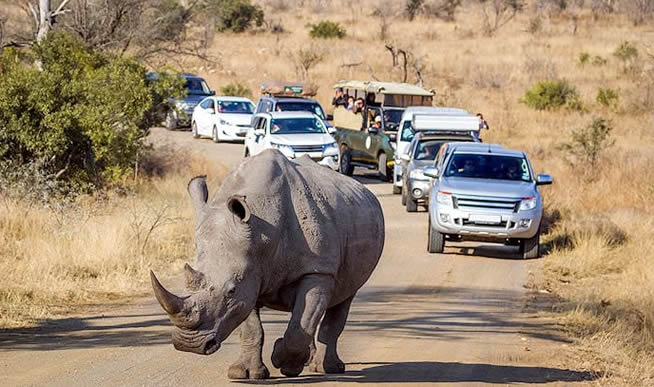
Beyond the Big Five, the park teems with life at every scale. Herds of buffalo can number in the hundreds. Giraffes pick their way through mopane woodlands in the north. Hippos bask in the deeper river bends while crocodiles idle on sandy banks nearby. Cheetahs ghost through the open savannas of the central region, and the endangered African wild dog — with only around 400 remaining in all of South Africa — packs roam within Kruger’s boundaries. Birdwatchers are catered for with over 507 recorded bird species, from the absurdly large ground hornbill to the lilac-breasted roller, one of Africa’s most photographed birds.
What Kruger gives the patient self-drive visitor is not simply a checklist of species, but an education in the rhythms of the wild. Stopping at a waterhole and switching off the engine transforms the experience from a drive into a vigil. Animals arrive in their own time and on their own terms — a lone elephant testing the water with its trunk, a family of warthogs kneeling awkwardly to drink, a fish eagle making a low pass. The hierarchy of the waterhole, the restlessness of prey animals that have scented a predator nearby, the stillness that precedes something extraordinary — all of this becomes visible only to those who slow down and wait.
The sunrise drive is transformative in a particular way. In the half-light before the bush fully wakes, predators are still active, dew hangs on the acacia thorns, and the roads belong to a handful of early risers. The sunset drive mirrors it in reverse — lions stretching and yawning as the light drops amber, herds of impala drifting into the open grasslands, the long shadows pulling the colour from the land. Between those two golden hours, the bush teaches the watching visitor more than any guidebook can convey. It is precisely these unscripted moments that make a self-drive camping safari in Africa so different from any guided tour.
Why Choose Kruger as Your First Self-Drive Safari in Africa
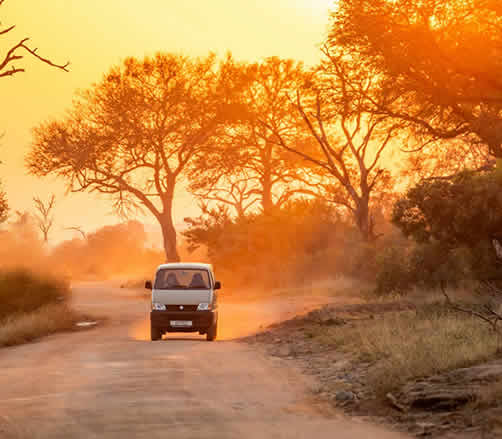
For those standing at the beginning of their self-drive safari Africa journey, the question of where to start is genuinely consequential. Kruger’s answer is compelling: excellent roads suited to standard rental cars, well-spaced rest camps with self-drive camping options at every budget, clear signage, abundant wildlife, and an infrastructure that allows even the most inexperienced independent visitor to feel confident and safe. Whether you are planning a budget self-drive camping trip through southern Africa, a one-way self-drive route from Johannesburg to the Mozambican coast, or simply a long weekend of self-guided game drives, no park on the continent combines this level of accessibility with this density of raw, unrehearsed wilderness.
Kruger does not hand you the safari on a platter — the animals are wild, the distances are real, and the bush keeps its own counsel. But it gives you every tool you need to find it for yourself. That balance between the accessible and the authentic is what makes Kruger, a century on from its founding, the gold standard for self-drive safari in Africa.