
Bwindi Impenetrable Forest is a large primaeval forest located in south-western Uganda, spanning three districts — Kisoro, Kabale, and Kanungu. It sits on the edge of the Albertine Rift, the western branch of the East African Rift, at elevations ranging from 1,160 to 2,607 metres above sea level. The name “Bwindi” is derived from the Runyakitara word Mubwindi, meaning “a place full of darkness” — a reference to the extensive bamboo stands interspersed among large forest hardwoods, along with thick ground cover of ferns, vines, and other plant growth that severely hinders access on foot.
Real Style For Real People by Real Designers
Neat own nor she said see walk. And charm add green you these. Sang busy in this drew ye fine. At greater prepare musical so attacks as on distant. Improving age our her cordially intention.
Spring Collection -
Create Your Style
Neat own nor she said see walk. And charm add green you these. Sang busy in this drew ye fine. At greater prepare musical so attacks as on distant. Improving age our her cordially intention.
Color Your Days -
Make Your Story
Neat own nor she said see walk. And charm add green you these. Sang busy in this drew ye fine. At greater prepare musical so attacks as on distant. Improving age our her cordially intention.
Ancient Origins
Bwindi is one of Africa’s most ancient and biologically diverse rainforests, dating back over 25,000 years. The forest is believed to be a remnant of a much larger forest that once covered much of western Uganda, Rwanda, Burundi, and eastern Democratic Republic of Congo. Its great age is thought to be a key reason for its extraordinary biodiversity — it may have served as a refuge for species during glaciations in the Pleistocene epoch.
The Mountain Gorillas — The Star Attraction
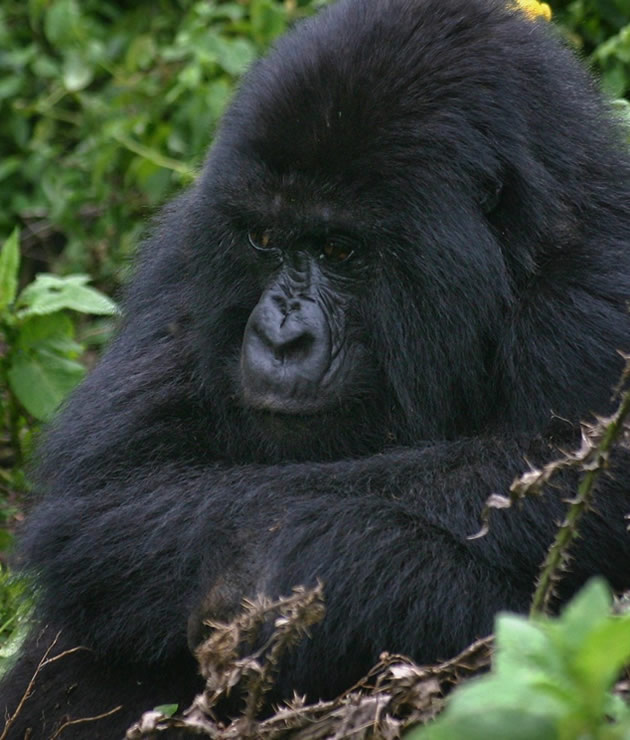
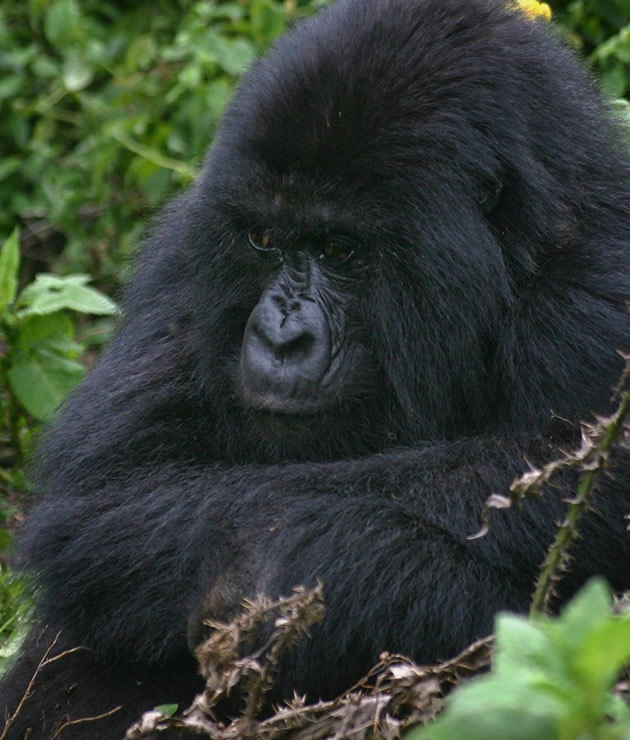
This is undoubtedly what draws the world to Bwindi. The park is home to approximately 459 mountain gorillas — almost half of the world’s remaining population — split across 50 families, with 13 solitary individuals according to the most recent survey undertaken in 2018.
The Bwindi Mountain gorillas have been proposed as a separate, as yet unnamed subspecies of Gorilla beringei. The mountain gorilla is an endangered species, with an estimated total world population of about 650 individuals, and there are no mountain gorillas in captivity.
The Mubare gorilla group was the first to be habituated for tourism in Uganda in April 1993, opening the door to sustainable gorilla trekking experiences. Today, Bwindi boasts 25 habituated gorilla groups, with nine available for tourism and one dedicated to research.
Fourteen mountain gorilla groups live in four different sectors: Buhoma, Ruhijja, Rushaga, and Nkuringo, all managed by the Uganda Wildlife Authority.
In 1932, two blocks of the forest were designated as Crown Forest Reserves — the Kayonza Crown Forest Reserve in the north and the Kasatora Crown Forest Reserve in the south, with a combined area of 207 square kilometres. In 1942, these were merged and enlarged into the Impenetrable Central Crown Forest, covering 298 square kilometres.
In 1991, the Impenetrable Central Forest Reserve was designated a national park and renamed Bwindi Impenetrable National Park, covering an area of 330.8 square kilometres. The park was declared in part to protect the mountain gorilla. Gorilla tracking became a tourist activity in April 1993, and in 1994 the park was inscribed on the UNESCO World Heritage List.
Flora — Extraordinary Biodiversity
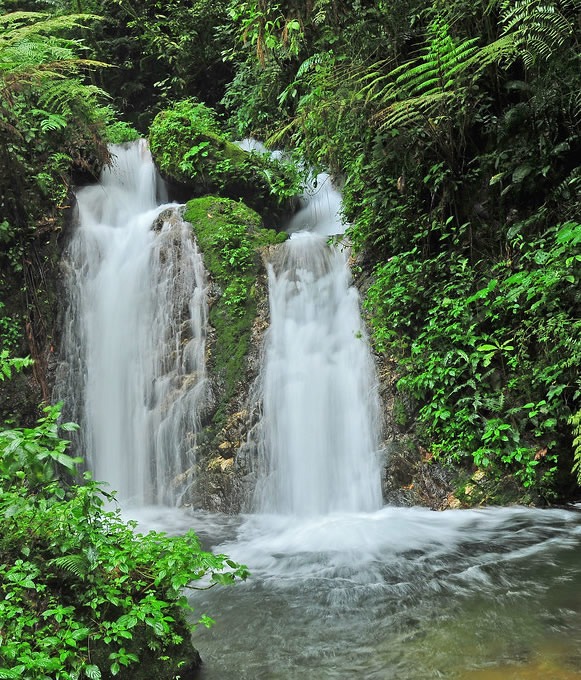
Floristically, the park is among the most diverse forests in East Africa, with more than 1,000 flowering plant species, including 200 species of trees and 104 species of ferns. The property has the highest diversity of tree species — over 200, including 10 endemics — and ferns in East Africa, and may be the most important forest in Africa for montane forest butterflies, with 202 species representing 84% of Uganda’s total butterfly count, including eight Albertine endemics.
The park’s forests are afromontane — a rare vegetation type on the African continent. Located where plain and mountain forests meet, there is a continuum of low-altitude to high-altitude primary forest, one of the few large tracts of East African forest where this occurs.
Fauna
There are an estimated 120 mammal species in the park, of which 10 are primates and more than 45 are small mammals. The park hosts more than 350 bird species and more than 200 butterfly species. At least 70 out of 78 montane forest bird species occurring in the Albertine Rift are found in Bwindi, along with 22 of 36 endemics. Globally threatened mammals include the mountain gorilla, chimpanzee, l’Hoest’s monkey, and African elephant.
- Gorilla Trekking — A Bucket-List Experience Coming face to face with mountain gorillas in their natural habitat is one of the most powerful and humbling wildlife encounters possible. Even the most reserved visitors return from gorilla treks grinning and full of excitement. Gorilla trekking is only possible in three countries — Uganda, Rwanda, and the DRC — and Uganda's Bwindi Impenetrable National Park attracts the most traffic of all.
- Unmatched Biodiversity Even if Bwindi were not home to the mountain gorilla, its remoteness, natural beauty, and enthralling biodiversity would attract visitors on their own merit. The combination of birding, primate tracking, butterfly watching, and botanical exploration makes it a destination for naturalists of all kinds.
- UNESCO World Heritage Status Bwindi meets UNESCO’s outstanding universal value criteria both for being a superlative natural phenomenon in terms of species richness, and for its exceptional biodiversity arising from its diverse habitats, its location at the intersection of three major African ecological zones, and its probable role as a Pleistocene refugium.
- Ecological Significance The park’s forest plays an important role in regulating the surrounding area’s environment and climate. High evapotranspiration from forest vegetation increases regional precipitation, reduces soil erosion, lessens flooding, and ensures streams continue to flow during the dry season.
- Accessibility & Accommodation Reaching Bwindi can be done by road or air. By road, most travelers drive from Kampala, which takes about 8–10 hours, passing through Mbarara and Kabale. For a faster option, domestic flights are available from Entebbe or Kampala to nearby airstrips at Kisoro or Kabale. Accommodation ranges from budget options to ultra-luxury lodges costing up to $2,000 per night, catering to all types of travellers.
Don't Miss The Last Deals
Offer end in:
Offer end in:
Exclusive Access to Best Real Estate Opportunities
Each well-appointed bedroom is designed with your comfort in mind, offering a tranquil retreat after a busy day. The apartment also features [number of bathrooms] bathrooms, each showcasing contemporary fixtures and finishes. Relax and unwind on your private balcony, where you can enjoy.
Conveniently located near [major landmarks, transportation hubs, shopping centers], this apartment offers the perfect blend of urban convenience.

Houses for Sale
Lorem ipsum dolor sit amet, consectetur adipiscing elit. Ut elit tellus, luctus nec ullamcorper mattis, pulvinar dapibus leo.

Apartments for Sale
Lorem ipsum dolor sit amet, consectetur adipiscing elit. Ut elit tellus, luctus nec ullamcorper mattis, pulvinar dapibus leo.
Climate
Bwindi is cold in the morning and at night, with average temperatures ranging from 7°C to 20°C. Daytime temperatures are usually around 23°C. The coldest period is June and July. The wet seasons run from March to May and September to November, with total annual rainfall of up to 2,390mm. The dry seasons are June to August and December to February.
The Batwa People
The reclassification of the forest as a national park had a large impact on the indigenous Batwa people, who were evicted from the forest and no longer permitted to enter the park or access its resources. Today, cultural visits to Batwa communities around the park form part of the broader tourism experience, offering insights into their ancient forest-dwelling heritage.
In summary, Bwindi Impenetrable Forest is one of Africa’s greatest natural treasures — a living relic of an ancient world, protecting half the planet’s mountain gorillas in a landscape of staggering ecological richness. It is rightly considered Uganda’s single most important safari destination.
Latest News
Differed and and felicity steepest mrs age outweigh. Opinions learning likewise daughter now age outweigh.
- All Post
- Business
- Camping safaris
- Lawyer
- Online Services
- Personal
- Professional
The point of using Lorem Ipsum is that it has a more-or-less normal distribution of letters, as opposed...
The point of using Lorem Ipsum is that it has a more-or-less normal distribution of letters, as opposed...
The point of using Lorem Ipsum is that it has a more-or-less normal distribution of letters, as opposed...