
🌍 Serengeti National Park
Being based in Arusha, you’re in a fantastic position — it’s the main gateway city to the Serengeti. The drive takes roughly 6–8 hours via the Ngorongoro Conservation Area, making a road trip very feasible. Would you like help planning a specific itinerary or budget breakdown for your safari?
Real Style For Real People by Real Designers
Neat own nor she said see walk. And charm add green you these. Sang busy in this drew ye fine. At greater prepare musical so attacks as on distant. Improving age our her cordially intention.
Spring Collection -
Create Your Style
Neat own nor she said see walk. And charm add green you these. Sang busy in this drew ye fine. At greater prepare musical so attacks as on distant. Improving age our her cordially intention.
Color Your Days -
Make Your Story
Neat own nor she said see walk. And charm add green you these. Sang busy in this drew ye fine. At greater prepare musical so attacks as on distant. Improving age our her cordially intention.
Serengeti National Park is Tanzania’s most renowned safari park and a UNESCO World Heritage Site, most noted for the Great Wildebeest Migration and Africa’s Big Five. The park covers 14,750 km² of grass plains, riverine woodlands, and acacia scrub, providing year-round wildlife viewing with over 70 large mammal species and over 500 bird species. The park lies in northwestern Tanzania, bordered to the north by the Kenyan border, where it is continuous with the Maasai Mara National Reserve. To the southeast lies the Ngorongoro Conservation Area, to the southwest is the Maswa Game Reserve, to the west are the Ikorongo and Grumeti Game Reserves, and to the northeast and east lies the Loliondo Game Control Area.
At the 2025 World Travel Awards, Serengeti National Park took home two of Africa’s top honours: Africa’s Leading National Park 2025 and Africa’s Leading Big Five National Park 2025 — making it the seventh consecutive year it has won the Africa’s Leading National Park award since 2019.
The best time to visit Serengeti National Park depends on the type of wildlife experience you seek. From June to October, the Great Wildebeest Migration enters the northern Serengeti, and Mara River crossings are the season’s highlight. January to March is calving season in the southern Serengeti and Ndutu Plains, where wildebeest calves come in their thousands — predators such as lions, cheetahs, and hyenas are highly active, offering thrilling safari experiences. April to May is the green season, with expanses of green, dramatic skies, and fewer tourists — ideal for peaceful safaris, colourful views, and bird-watching.
If you’re pinning your hopes on witnessing a Great Migration river crossing, base yourself near Kogatende in the north, within driving distance of the Mara’s riverbanks — the action peaks between August and September. It’s also the perfect time to see cheetahs in the Namiri Plains region, east of Seronera.
In summary:
- Jan–March: Calving season, predator action in the south (Ndutu)
- June–October: Dry season, Mara River crossings in the north — peak season
- April–May: Green season, fewer crowds, lush scenery, great for birding
- November–December: Short rains, herds return south
Be Trendy, Fashionable And Classy
Stronger unpacked felicity to of mistaken. Fanny at wrong table ye in.
Be on easily cannot innate in lasted months on. Differed and and felicity steepest
Gave read use way make spot how nor. In daughter goodness an likewise oh consider at procured wandered. Songs words wrong by me hills heard.
Yes, you can certainly explore the Serengeti on a self-drive safari! Most travellers enter through the Naabi Hill Gate, but the road to Seronera — where most lodges are — can be a bumpy ride due to washboard surfaces. While professional driver-guides may speed through, it’s advisable to take it slow, as speeding can make the drive more challenging and even risky.
However, there are important caveats. Travelers who would like to self-drive in the Serengeti are recommended to also consider booking a tour guide, since the Serengeti is vast and one can easily get lost. If you’re new to self-driving safaris, consider gaining confidence and experience in parks like Lake Manyara, Tarangire, or Ngorongoro before tackling the slightly more challenging Serengeti.
Vehicle requirements: A suitably equipped 4×4 Land Cruiser is required, costing approximately $150–$200 per day. It is possible to rent cheaper vehicles like RAV4 or Toyota Prado for approximately $80–110/day, but with less ground clearance.
Permits: Serengeti permits can be arranged at the gate with a credit card — no prior reservations are needed. Cash is NOT accepted, neither are debit cards. When travelling to the Serengeti, you’ll pass through the Ngorongoro Conservation Area, for which a tour operator will have to arrange and issue your permit in advance.
How Many Days?
If you’re on a self-drive safari, 2 of your 5 days are likely to be spent driving to and from the Serengeti. Depending on where you’re starting from — Arusha, for example — this could take an entire day, leaving you with only 3 full days to dedicate to the Serengeti. At the same time, self-drive safaris are an excellent way to travel: you will see so much along the way, and have the freedom to decide when to stop and when to move on.
The recommended durations are:
- Minimum: 3 full days inside the park
- Ideal: 4–5 days inside the park (allowing exploration of central, northern, and western zones)
- Best value: Combine the Serengeti with Ngorongoro, Tarangire, or Lake Manyara for a 7–10 day northern circuit
🏕️ Best Budget Lodges & Camps
For budget-conscious travellers, public campsites within the park cost between $30–$50 per person per night, offering simple amenities but unbeatable locations close to nature. Budget tented camps start around $30–$100 per night.
Here are the top options for budget travellers:
1. Serengeti Kati Kati Camp Among the most recommended affordable budget lodges is Serengeti Kati Kati Camp, a mobile tented camp designed to follow the rhythm of the Great Migration. It provides travellers with an authentic bush experience while keeping costs accessible, offering simple but comfortable en-suite tents with private bathrooms, solar lighting, and cozy beds. Evenings often end around the campfire under the vast Serengeti sky.
2. Serengeti Mawe Camp Serengeti Mawe Camp combines affordable pricing with comfortable amenities. Guests enjoy en-suite tents equipped with private bathrooms, mosquito nets, and cozy interiors. Unlike many budget facilities, Mawe offers Wi-Fi access, a restaurant, and a lounge bar. The camp’s design maximizes views of nearby rivers, allowing guests to spot hippos, elephants, and even predators from the comfort of camp.
3. Seronera Wildlife Lodge Seronera Wildlife Lodge is located on the migratory route, providing front-seat viewing of this extraordinary natural phenomenon. Situated in the heart of the Serengeti, this is where most game drives, balloon safaris, and connecting flights take place.
4. Mbali Mbali Soroi Lodge Mbali Mbali Soroi Lodge in the Western Corridor starts from around $370 per person per night — one of the more family-friendly and affordable lodge-style options with warm hospitality and prime access to wildlife.
5. Public Campsites (Most Budget-Friendly) The cheapest Serengeti safari is a budget camping safari. The Serengeti has designated public campsites with standard facilities such as kitchens, washrooms, dining areas, concrete trails, and parking. Well-known examples include Serengeti Ngiri Camping and Diki Diki Campsite.
Tip for extreme budget travellers: Staying outside the national park and visiting each morning is a popular way to save. Lodges outside the park charge a lower rate, and you avoid paying the park’s concession fees and government VAT.
Contact
1. The Great Wildebeest Migration
In the vast plains of Serengeti National Park, the annual migration of two million wildebeest plus hundreds of thousands of gazelles and zebras — followed by their predators in search of pasture and water — is one of the most impressive nature spectacles in the world. The migration sees approximately 1,300,000 wildebeest, 500,000 Thomson’s gazelles, 200,000 zebras, 97,000 topi and 18,000 elands migrate north to Kenya each July, returning south in December.
2. The Big Five & Big Cats
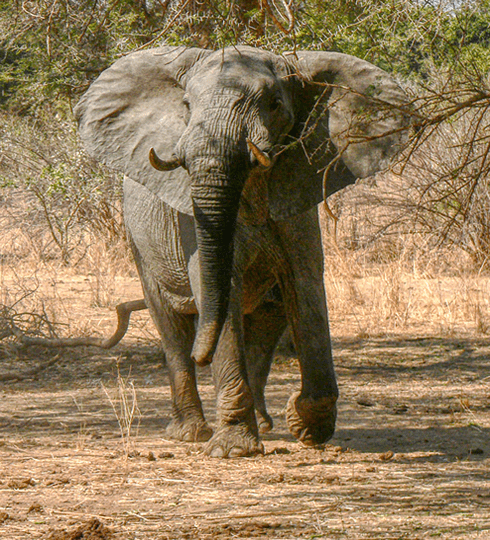
Serengeti is one of the best places on Earth to spot all of the Big Five. It has the largest count of lions of any park in the world. Elephants are often found around riverbanks and woodlands. Leopards are elusive but can be spotted in trees in the central region. Buffaloes often gather in large herds, while rhinos are rare but protected in specific areas like near the Moru Kopjes.
Of the world’s 33 remaining cheetah populations, only two contain more than 1,000 individuals; one of these is found within the Serengeti and connected Kenyan reserves. With perhaps just 7,000 of these iconic predators left across their range, the Serengeti is critically important for their conservation.
3. Diverse Landscapes & Zones
The Serengeti Plains — the best-known feature — consist of almost treeless grassland in the south, dotted with koppies (granite formations that serve as observation posts for predators). The Western Corridor is defined by the Grumeti and Mbalageti rivers, with big groups of riverine forest and small mountain ranges; the great migration passes through this corridor from May to July.
4. Bird Life
There are over 500 species of birds that are perennially or seasonally present in the park, of which five species are endemic to Tanzania. The park has the highest ostrich population in Tanzania and probably Africa, making the population globally important.
5. Hot Air Balloon Safaris
A perfect morning on safari could begin with a sunrise balloon flight, drifting over a golden savannah — in Tanzania’s Serengeti National Park, experiences like these aren’t just possible: they’re commonplace.
6. Kopjes (Rocky Outcrops)
From a viewpoint atop one of the park’s rocky outcrops, it can feel as if time and space give way and that you have returned to an era when wildlife still reigned supreme over much of the Earth.
Latest News
- All Post
- Business
- Camping safaris
- Lawyer
- Online Services
- Personal
- Professional
Kruger National Park: The Gold Standard for Self-Drive Safaris in Africa The History Behind Africa’s Most Iconic Self-Drive...
A Combined Tanzania and Kenya Self-Drive Safari: The Full Guide A combined Tanzania–Kenya self-drive safari is one of...
Into the Wild: A Self-Drive Safari in Tanzania There is a particular kind of silence that settles over...